How this system works
A field-sequential LCoS engine like the one reported in Meta Ray-Ban Display. LEDs flash red, green and blue in turn, a homogenizer evens the light, a polarizing beam splitter sends it to the reflective panel, and the image light returns through the cube into a lens that collimates it for the waveguide.
LEDs flash red, green and blue in turn. The beam splitter sends the light onto the panel; only switched-on pixels return with rotated polarization, pass through the cube and are collimated by the lens for the waveguide.
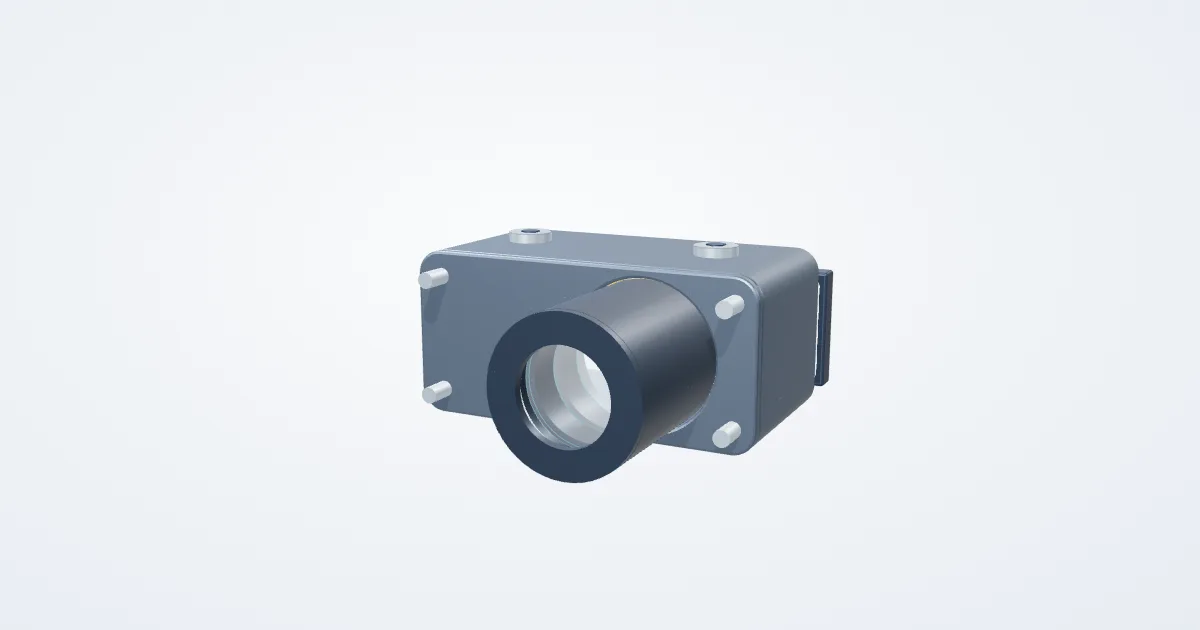
What to look for: The illumination arm feeding the cube from the side, the panel behind the cube, and the lens barrel on the exit face.
Compare the right roles
LCoS, micro-OLED or microLED?
These are different panel technologies with different makers. LCoS modulates light from separate LEDs (OmniVision, Himax, Kopin). Micro-OLED emits its own light and is common in birdbath-style glasses (Sony, BOE, SeeYA). MicroLED is bright and compact, but its leading maker, JBD, is private. The panel type decides which glasses a maker can serve.
Does a teardown prove a supply contract?
No. A teardown identifies a part in one unit of one product at one point in time. It does not show volumes, pricing, exclusivity, or whether the next model uses the same part. OmniVision has not itself confirmed the Meta Ray-Ban Display design win.
OmniVision’s LCoS is the teardown-identified panel in Meta Ray-Ban Display. Himax and Kopin market LCoS for AR, while Sony, BOE and SeeYA make micro-OLED; SeeYA’s prospectus names RayNeo Air3 glasses. The leading microLED maker, JBD, is private.
Open each company below for its source and limitations. Sector membership does not establish a confirmed supply contract.
Inside the assembly
RGB LED illumination
Red, green and blue LEDs flash in sequence while the panel shows each color field (field-sequential color). Teardowns disagree on how many LEDs the Meta Ray-Ban Display engine uses, so this is a schematic RGB source.
Stock-link scope: Himax’s front-lit LCoS modules integrate their own illumination. The LED-die supplier in shipping engines is not identified. KGOnTech attributes the Meta Ray-Ban Display engine to Goertek (not confirmed by Meta or Goertek), but Goertek’s optics business sits in Goertek Optical, a non-consolidated associate since Dec 2025, so Goertek is not mapped. ams OSRAM’s glasses LEDs are infrared eye-tracking parts and are not mapped here.
Fly-eye homogenizer
Two paired microlens arrays scramble the LED output into uniform rectangular light, so the image has even brightness and color.
Stock-link scope: Optical-engine makers integrate the microlens arrays: Sunny reports AR optical engines (2025 annual results). No standalone microlens-array supplier is verified. Goertek’s engine work sits in Goertek Optical (a 38.34% associate), so Goertek is not mapped.
Polarizing beam splitter
A coated cube reflects one polarization onto the panel. Switched-on pixels rotate the returning light’s polarization, so only image light passes through toward the lens.
Stock-link scope: Engine integration (Sunny AR optical engines). This is not a claim of standalone PBS-cube or wave-plate supply.
LCoS microdisplay
Liquid crystal on a CMOS backplane modulates each pixel’s polarization. Teardowns identify an OmniVision LCoS panel in Meta Ray-Ban Display; OmniVision’s catalog OP03011 is 648 × 648 pixels at 3.8 µm with a MIPI-DSI input.
Stock-link scope: OmniVision’s LCoS is teardown-identified in Meta Ray-Ban Display (TechInsights; KGOnTech read OP03010 on the flex). Himax markets front-lit LCoS (HX7319FL) for AR glasses with no named shipping win; Kopin markets FLCoS microdisplays for head-mounted displays and defense. Snap Specs use a proprietary LCoS display system with an unnamed panel supplier. Micro-OLED (Sony, BOE, SeeYA) and microLED (JBD, which is private) are different panel types, listed at sector level.
Projection lens & housing
A short lens group collimates the image, so each pixel becomes a ray angle the waveguide can carry. The housing keeps the optics aligned; any shift moves the image.
Stock-link scope: Projection optics ship inside a light engine: Sunny reports AR optical engines, and Himax sells a complete 0.34 cc LCoS projector module (its collimator was co-developed with Giga-Image Technology, not mapped). Standalone lens-element supply is not established.
Display driver flex
A flexible circuit carries the MIPI video link, panel bias and LED drive current from the logic board through the hinge.
Stock-link scope: OmniVision’s catalog LCoS (OP03011) integrates the frame buffer, MIPI-DSI receiver and ASIC driver on the panel. Synaptics’ XR display drivers are flat-panel headset DDICs, not microdisplay drivers, so Synaptics is not mapped. The flexible-circuit fabricator is not identified.