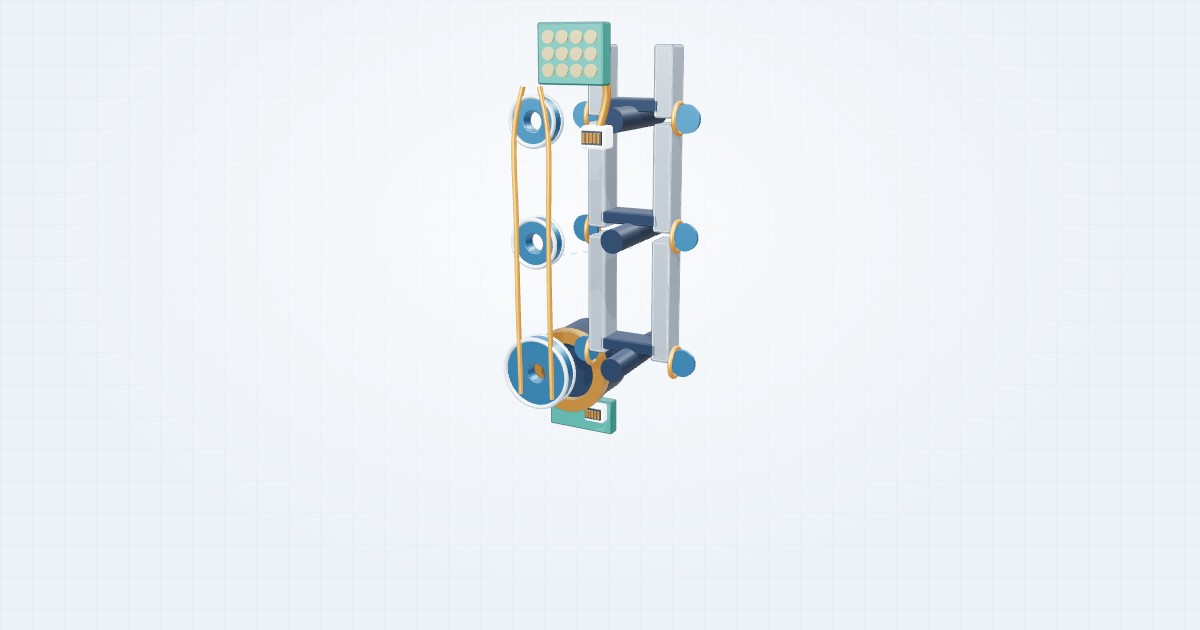
Small motors, transmissions, and touch feedback let hands grasp delicate objects. Packaging many controlled movements into a small space is the challenge.
Dexterous-hand developers, gripper manufacturers, small-motor suppliers, and sensing companies occupy different layers. An industrial gripper is not automatically a five-finger humanoid hand.
Are tendon suppliers verified?
No direct tendon-cable supplier is established in this universe. The illustration explains a tendon-driven mechanism; it is not a procurement list or a claim about every humanoid hand.
ROBOTIS offers dexterous hands and smart actuators. MOONS’ addresses miniature motors; Novanta and TE add force feedback. These are complementary parts of the hand supply chain.
Open each company below for its source and limitations. Sector membership does not establish a confirmed supply contract.
Inside the assembly
Miniature motor & drive
A compact motor and drive regulate the finger’s force and position.
Stock-link scope: Miniature motors or integrated hands, plus hand motor-control electronics. Chip suppliers do not manufacture the mechanical finger.
A tendon-driven architecture transfers motor force through cables. Other hands use direct or geared joints; this is one illustrative layout.
Stock-link scope: No tendon-cable supplier was verified. The illustrated tendon is one architecture; documented geared hands do not establish tendon supply.
No verified direct company match in the current universe.
Phalanges & articulated joints
Linked finger segments pivot around pins to conform to an object’s shape.
Stock-link scope: Complete dexterous hands (ROBOTIS, Leadshine) and industrial grippers (SMC, CKD). Industrial grippers are not five-finger humanoid hands.
Feedback helps the controller limit grip force. Listed suppliers offer relevant force-sensing or signal-chain technology, not necessarily this fingertip design.
Stock-link scope: Tactile/contact-force sensors and supporting measurement electronics. Joint angle encoders and wrist torque sensors are different from fingertip touch.
The humanoid application portfolio covers power, motor control, and sensing. Hand relevance is control electronics rather than mechanical finger manufacture.
Keli reports its six-axis force sensors at the wrists of Botler humanoids in Zeekr factory testing. Wrist feedback is not the same as fingertip tactile skin.
Leadshine markets humanoid motors, joint modules, and complete dexterous hands. Documented hand designs use geared or screw transmissions, not the model’s tendon.
Humanoid reference designs cover motor drives, BMS, sensing, controllers, and multi-axis hand control. TI supplies chips, not complete mechanical hands.